Wolverhampton continues to dominate private hire driver licensing
| 3 October 2024, 15:10
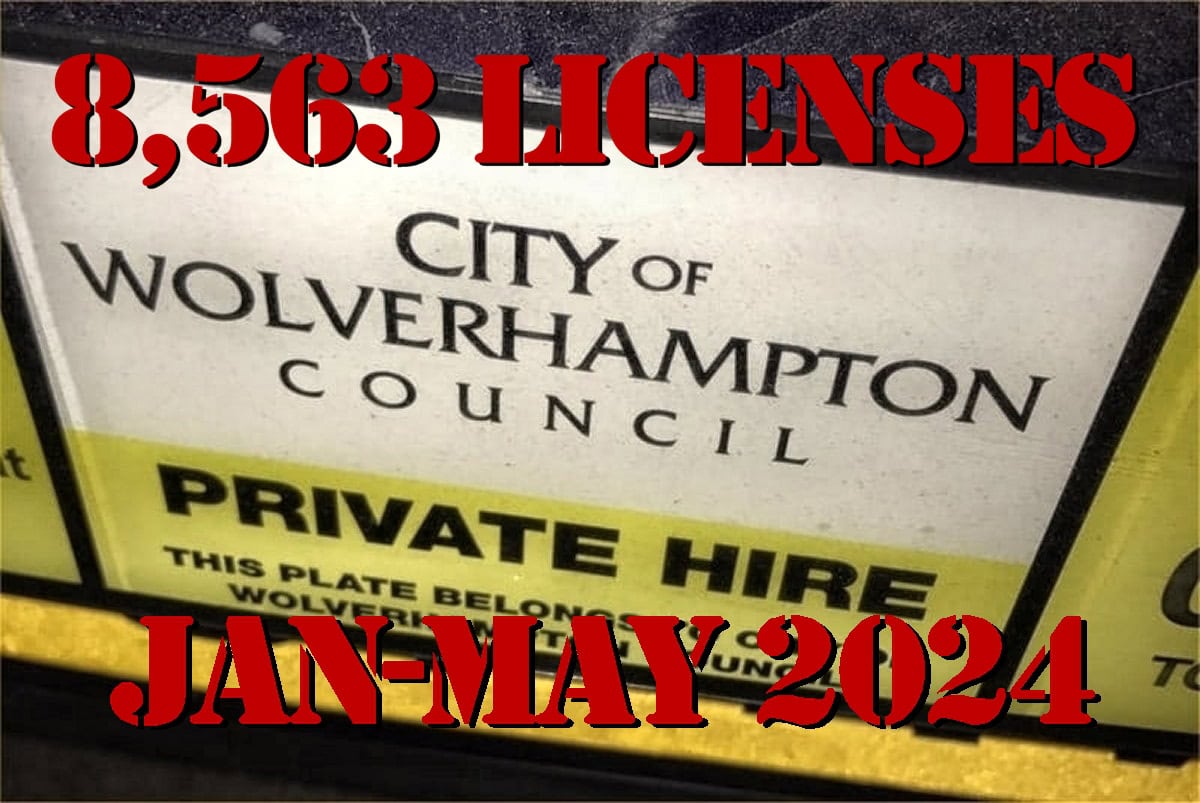
Wolverhampton Council issued 8,563 new private hire driver’s licences in the first five months of this year, as increasing numbers of drivers choose to get licensed there rather than by their local authority.
The figure, released by the GMB Union, is vastly higher than other neighbouring authorities: 277 licenses were issued in Birmingham, 194 in Walsall, 76 in Leicester, and just 27 in Coventry.
Earlier research showed that around 96% of the licenses issued in Wolverhampton in the 2023-24 financial year were for drivers who lived elsewhere.
The GMB union said drivers were concerned about a “flooded marketplace” that was pushing down earnings. But City of Wolverhampton Council said the reason drivers chose to use its service was because of longer processing times and higher fees elsewhere. Wolverhampton has geared up to offer a more efficient service, and the council said it could not refuse applicants because they lived in a different area.
The council has also addressed concerns about safety standards by setting up joint authorisation agreements, allowing taxi compliance officers from multiple councils to work across local boundaries.
A successful pilot scheme launched in Milton Keynes saw Wolverhampton-licensed vehicles undergo roadside inspections by local officers. More than 800 roadside checks were conducted, leading to two vehicle suspensions.
The success has drawn interest from several councils, prompting Wolverhampton to propose expanding joint authorisation to Halton, Knowsley, Rotherham, and South Derbyshire councils.
Under current legislation, specifically Sections 68 and 73 of the Local Government (Miscellaneous Provisions) Act 1976, councils can authorise officers from other authorities to enforce taxi regulations.
Taxi drivers do not have to live and work where they obtain their license, though they may miss out on other benefits. During the Covid-19 pandemic, drivers who licensed elsewhere were denied local authority bailouts as these were dependent on the driver both living and being licensed in the same area.
Recently Reading Council allowed PHVs to access some local bus lanes, but only if the vehicles were Reading-licensed.
GMB Organiser Kate Gorton said there were barriers to an authority capping applications. “We’ve got one council essentially issuing licenses for the rest of the whole region.” She claimed that this was “pushing down income”.
The union has called for standardisation across the authorities that issue licenses, in terms of price, timescales, and the tests that drivers have to do.
And earlier in the year, Professor John Button, a leading transport industry academic, suggested that Wolverhampton should become the designated authority to handle all licensing, effectively creating a national private hire standard.
A spokesperson for Wolverhampton council said in a statement: “While City of Wolverhampton Council has never actively encouraged applications from drivers outside the city, existing legislation requires that if an application is submitted and requirements are met, then the application must be granted.
“Applicants have always been able to apply to any licensing authority for taxi licenses and the council cannot refuse an applicant simply because they live in a different area. It is illegal for licensing authorities to impose a limit on the number of private hire licences it issues.
“As a council, we support further standardisation, however, legislation is required to introduce any changes and the council is not in control of this.”