Omada 9 SHS Road Test
| 21 July 2025, 15:47
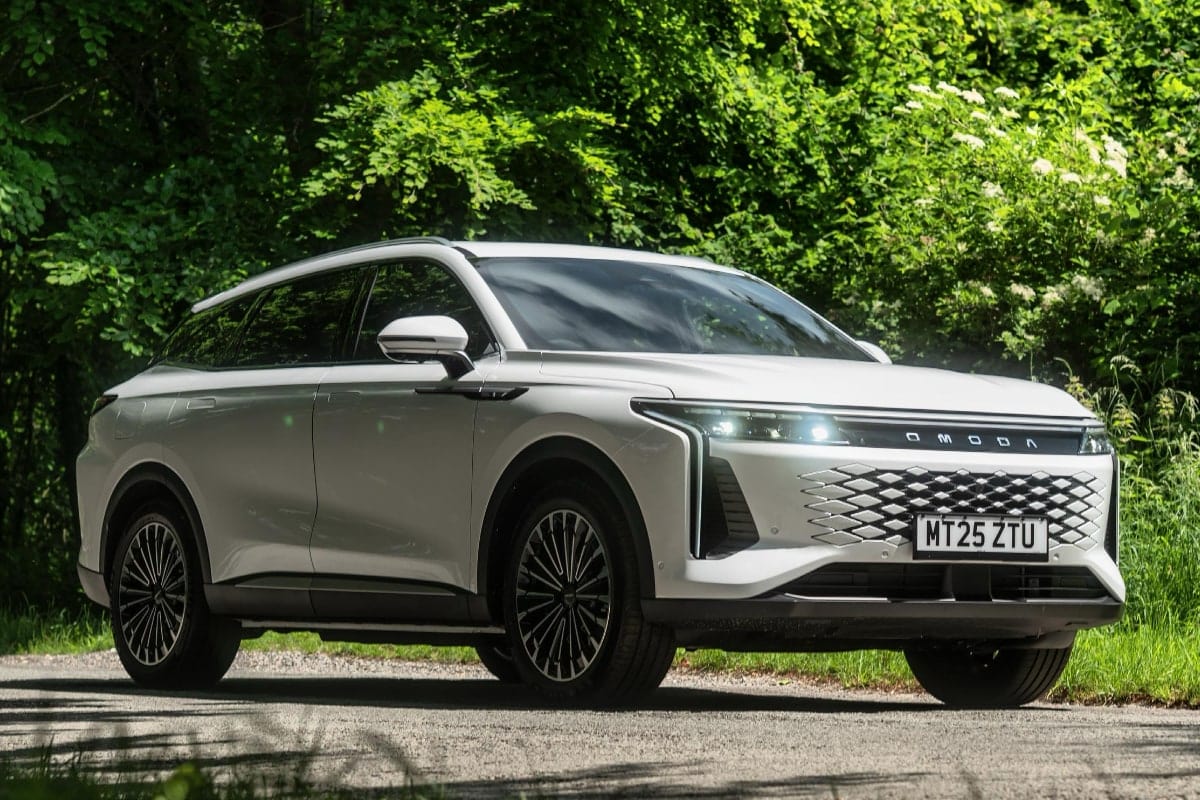
Make no mistake – the arrival of Chinese brands into the European market is transforming the car landscape. BYD might have grabbed the headlines, but the arrival of another Chinese automaker. Chery, is having just as big an effect.
Chery has been here for less than a year, but it has already launched two brands – Jaecoo and Omoda – and it’s taking a slightly different route to BYD. Instead of focusing on battery-electric cars, hybrids are at the core of the Omoda Jaecoo offering. It makes sense when you realise that Chery is one of the biggest makers and exporters of internal combustion engines, and there are no Chinese regulations putting an end to petrol-engined car sales.
This car, the Omoda 9 SHS, is the third model to hit UK showrooms. The smaller Omoda 6 does come as an EV, but the Omoda 9 is only available as a plug-in hybrid (SHS stands for Special Hybrid System). The same apples to the first Jaecoo model, the Jaecoo 7, which has hit the ground running in the UK, sitting just behind the BYD Seal U atop the UK PHEV sales league table in May 2025.
While BYD has targeted Tesla as its key competitor, Omoda Jaecoo is looking further up the ladder. The company says key rivals for the Omoda 9 are other luxury plug-in SUVs such as the Volvo XC60 and the Range Rover Velar.
This doesn’t mean that Omoda is the more up-market brand. We’re not talking VW-Audi here. Instead, the relationship between the two brands is more like Hyundai and Kia, where the two brands sit at roughly the same place in the market but with different appeals. Jaecoo is the more conservatively styled brand (the Hyundai equivalent) whereas Omoda is more funky alternative.
Omoda 9 is only available with one trim level, one powertrain and one interior colour – any colour you like as long as it’s black. The only options are paint colours. This makes pricing very simple – the Omoda 9 costs £44,990 which puts it into the “luxury” VED band – so you’ll need to factor in an annual £620 charge after the first 12 months. There’s no plan – or indeed, way – to strip out £4,990 of cost from the car.
The Omoda 9’s powertrain is clever. Rather than just bolt an electric motor on to a standard petrol engine, Omoda 9 uses a specially designed engine optimised for use as a hybrid. This is a 1.5-litre TGDI petrol engine, which uses a ‘Deep Miller Cycle’ ignition cycle, which allows for good constant-speed running with low consumption.
This is paired with an advanced three-speed hybrid transmission and two high-performance drive motors that can be operated independently or in combination. In hybrid mode, the engine will engage from 12 mph.
The hybrid system can work in a number of ways to optimise EV range, for example by using both motors to generate greater regenerative energy. And the petrol engine can act as a generator as well as a drive motor, charging up the battery pack on motorways, for example, to increase EV range for when the car reaches an urban clean air zone. Indeed, you can run the car in full EV mode until the battery depletes, or manually switch to petrol mode in order to save the battery range for when it’s needed. This is done easily via a separate menu on the touch screen, available by swiping down on the screen.
Factor in a large 34.46 kWh lithium-ion battery pack, and the upshot is a combined 449PS and 700Nm of torque; 0-62mph acceleration in just 4.9sec, and a total driving range of more than 700 miles (WLTP) thanks to a 70-litre petrol tank.
Of that range, 93 miles is achievable on battery alone, giving the Omoda 9 better battery-only performance than early EVs such as Nissan Leaf Mk1.
Under WLTP testing, with a fully charged battery, the Omoda 9 achieves fuel economy of 201.8 mpg. Across a complete WLTP cycle, overall fuel efficiency is measured at 43.6 mpg. CO2 emissions are just 38g/km.
Indeed, the Omoda 9 never reaches zero miles of EV charge, and internal technology enables the car to set its own self-charging level. Omoda 9 features a rapid DC charging ability that means a 30-80% recharge can take 25 minutes, while the 11 kW on-board charger enables home charging from 0 to 100% in 8 hours.
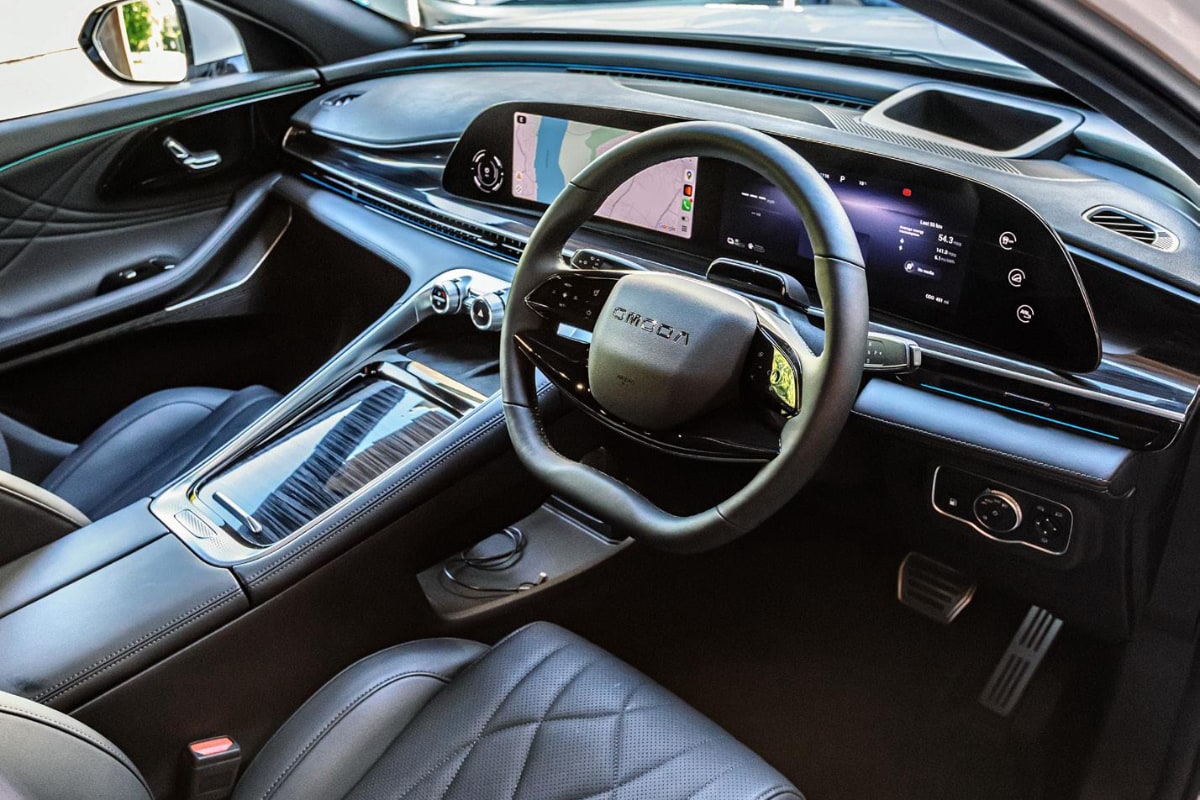
The interior is well finished and up-market, without being too minimal. Seats are trimmed in black “vegan leather” and the driver’s seat is supportive, though the base is a little narrow thanks to raised bolsters on the sides. I’d have liked more adjustment range too – the driving position felt too high for my liking, and it should be possible to set the seat at a lower height. Seat adjusters are door-mounted, Mercedes-style.
The dashboard has a twin-screen layout that doesn’t follow the same “tablet” trend as most manufacturers.
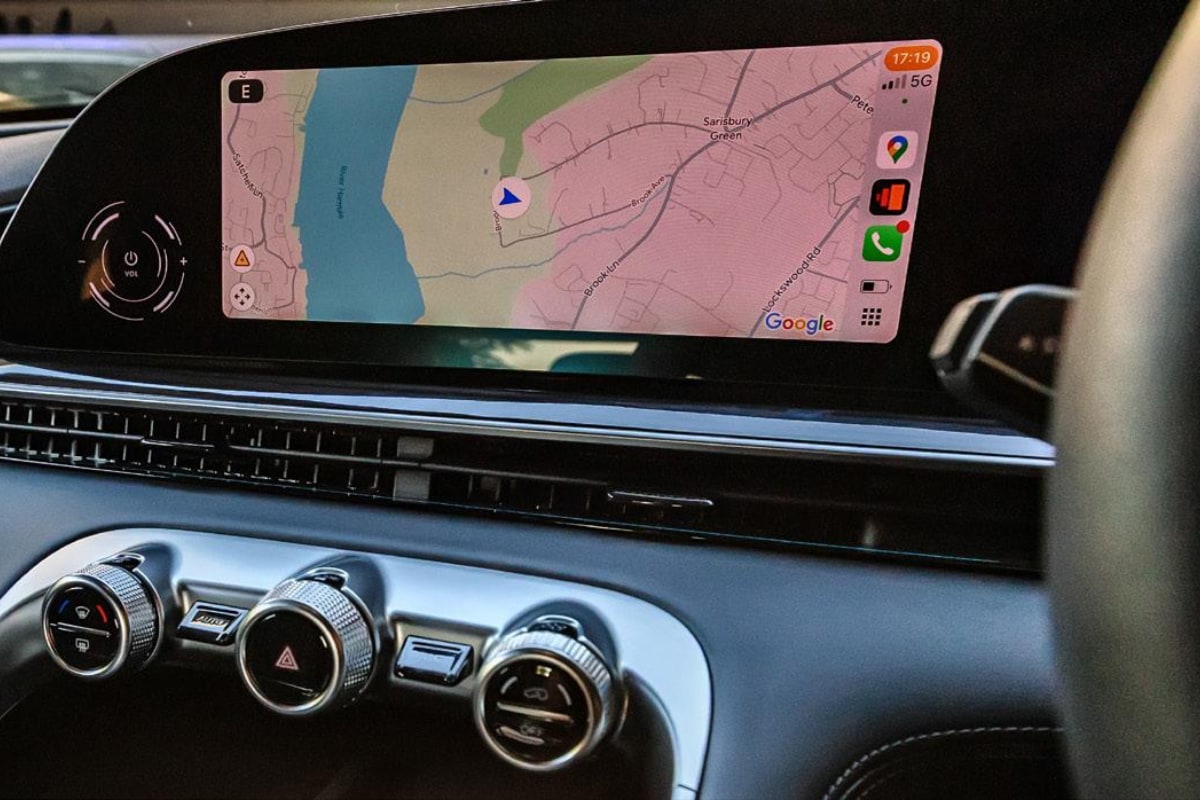
Instead the panel is a flowing curved display – which means separate dashboards for left- and right-hand drive versions. There’s also a head-up display as standard. Gearshift is via a stalk on the right-hand side of the steering column, with lighting and windscreen washer functions on the left. Radio controls and menus, as well as adaptive cruise functions, are controlled via steering wheel buttons.
Additionally there are three jet exhaust-shaped dials on the centre console, just above the twin phone charging pads, which allow manual adjustment of heating, air-con and demister. No need to dive into screen menus for these basic operations. The system runs on Apple Carplay or the Andoid equivalent.
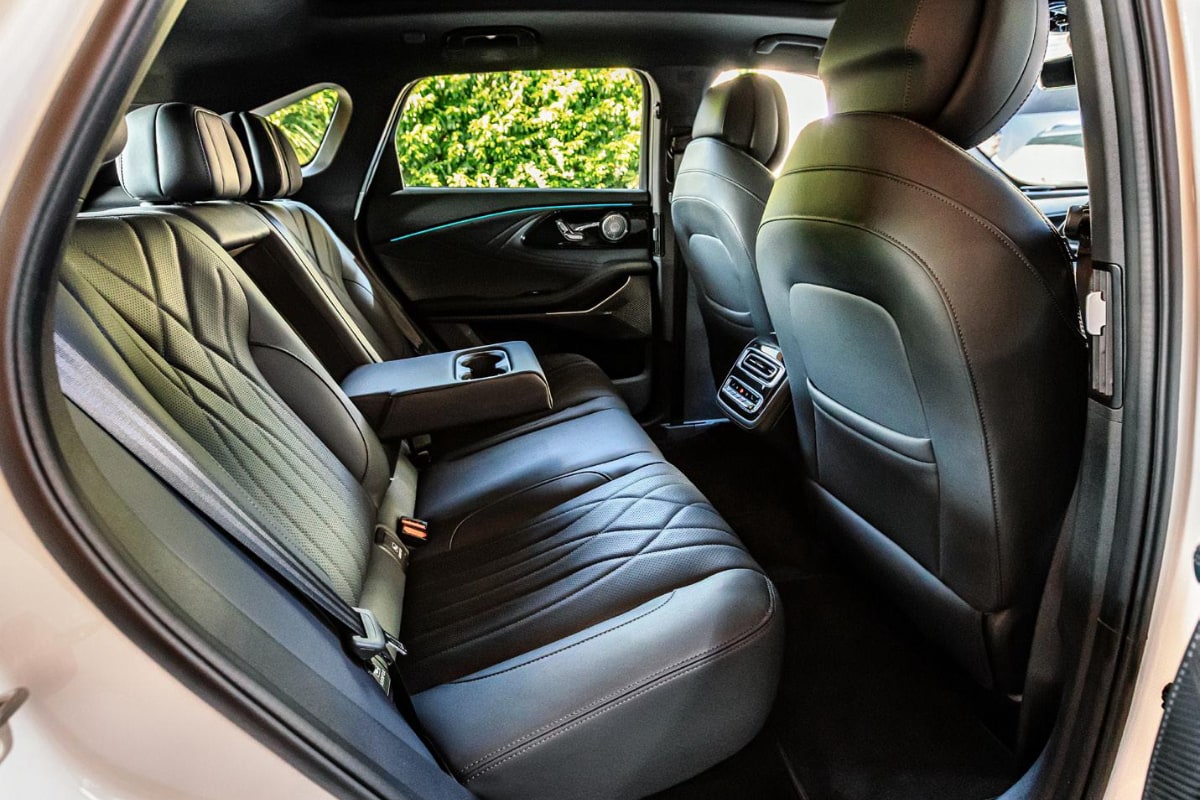
The rear cabin is extremely roomy, with ample head- and legroom, and a panoramic sunroof means it’s light and airy. However there’s no separate rear climate zone.
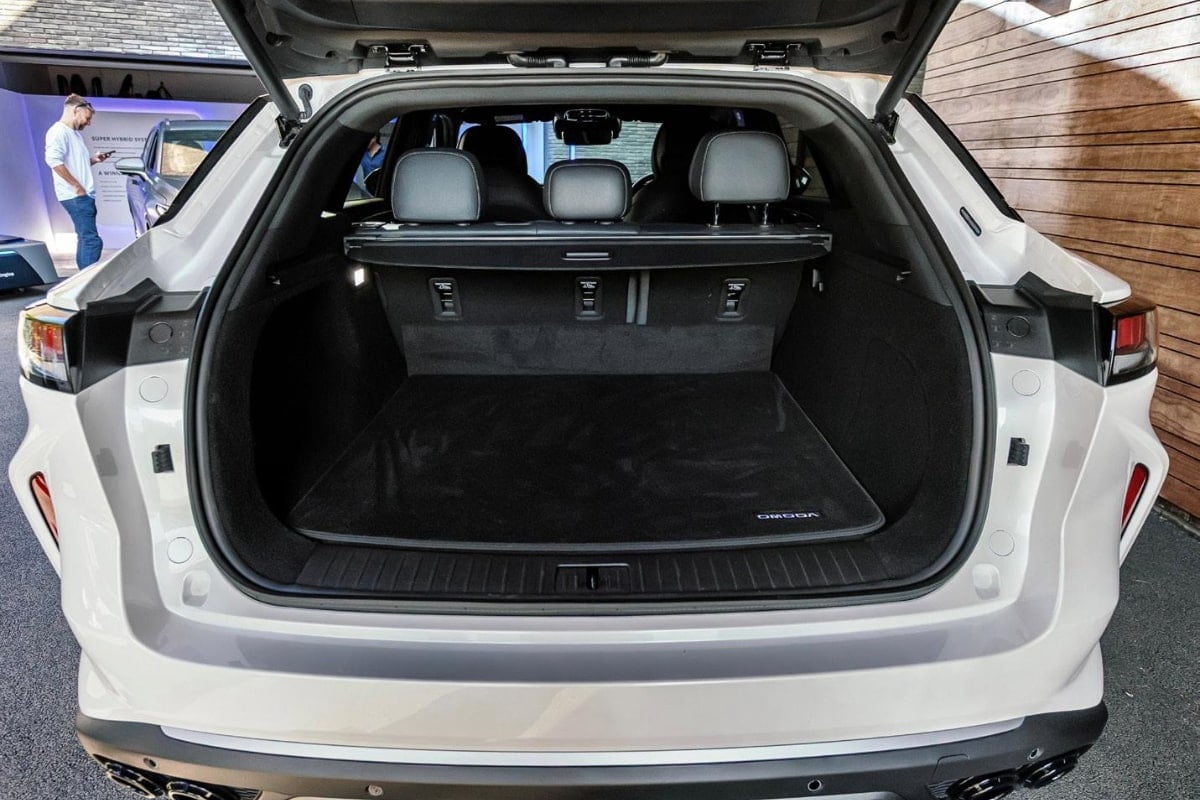
And we are a little concerned about the claim of a 660-litre boot. The boot floor is high, level with the loading lip, and while the area between the floor and the retractable cover could accommodate two suitcases, it’s not 660 litres. Omoda couldn’t clarify the measurement, but we suspect it’s the full boot area from floor to roof.
A sound system with individual speakers in the headrests means driver and passengers can all listen to separate audio feeds simultaneously.
On the road, the Omoda 9 is impressive. It’s very quiet, and the petrol engine switches in almost imperceptibly. This, along with the decent acceleration and planted feel make you feel that you’re driving an EV, not a hybrid.
Omoda 9 is very stable and solid at motorway speed, with very little noise. And it feels nimble enough for a big car on country roads. Electromagnetic suspension uses sensors that adapt the ride to changing surface conditions.
There are several driving modes (also switchable via one of the “jet exhaust” dials) including a number of off-road modes – the Omoda 9 is not just designed as an urban SUV. Normal mode is very smooth, while Eco makes more resistance on the accelerator pedal and more braking and deceleration regen –not so nice to drive, but it’ll help your economy.
VERDICT
Another new brand, another SUV-crossover. In this mainstream part of the market, consumers are getting seriously spoilt for choice.
Omoda is aiming high with this vehicle, hoping that a combination of practical performance and a high-quality finish will allow it to compete with the likes of Volvo and Range Rover rather than other more mainstream brands –including other Chinese rivals.
This all depends on how quickly the market takes to new nameplates like Omoda and its sister brand, Jaecoo. Judging by early sales figures, the plan is working. Indeed, evidence suggests that EV buyers, especially those under 40, are more likely to try out new brands.
As a car, there’s much to like about the Omoda 9. Only one specification means the spec is loaded with comfort and safety features. And the PHEV powertrain is very versatile and feels much more like an EV than older hybrids.
Comfort and performance is very good, though like all electrified powertrains there’s a little less engagement than with an ICE drivetrain. It’s at its best as a comfortable cruiser, well suited to the motorway. Our only real concern is the boot space, which felt smaller than claimed, with a relatively high floor.
DATA
Price as tested £45,990
| Specification | Details |
|---|---|
| Engine | 1.5-litre petrol plugin hybrid, with dual electric motor |
| Transmission | Three-speed auto, all-wheel drive |
| Battery | 34.46kW Li-Ion |
| System Power | 449hp |
| System Torque | 700Nm |
| Top Speed | 124mph |
| 0-62mph | 4.9sec |
| CO2 Emissions | 23g/km (WLTP) |
| Combined Range | 700 miles (WLTP) |
| Electric Range | 93 miles (WLTP) |
| AC Charging | 0-100% (11kW) 8h |
| DC Charging | 30-80% (70kW) 25min |
| Length | 4,774mm |
| Width | 1,932mm |
| Height | 1,686mm |
| Wheelbase | 2,800mm |
| Loadspace | 660 litres |
| Turning Circle | 11.9m |
| Warranty | 7 years / 100,000 miles |
| Battery Warranty | 8 years / 100,000 miles |
| Insurance Group | Grp 45 |
| VED Band | B+ £620 |