BYD Sealion 7 Excellence Road Test
| 1 April 2025, 15:53
It’s rare that an automotive story dominates the front pages of the global media. But Tesla’s dramatic decline is such a story. And for every loser, there are winners. And with Tesla’s sales tumbling off the sales leaderboard, the company that appears to be the best placed to make hay is China’s BYD.
With impeccable timing, BYD has just launched a fifth model into the UK market – and the BYD Sealion 7 is a car pitched directly at Tesla’s biggest-seller, the Model Y. Not only is it going on sale at the time of Tesla’s Musk-induced turmoil, it’s also hitting the market while the Model Y is undergoing a major facelift, with new supplies not due for a couple of months.
BYD launched the Sealion 7 to the press last month in typical style – a big, slick presentation, highlighting the scale and scope of the company’s operations. The numbers are impressive. In 2024 BYD sold 4.27 million vehicles, placing it sixth in the league table of global automakers, just behind Ford and ahead of GM, Honda and Nissan. And the trajectory is upwards – that 4.27m total was up a whopping 41% on 2023 and a ten-fold increase on 2020. BYD’s ambitions are clear.
Sealion 7 is the fifth – and to date, biggest – car that BYD has launched in the UK since it entered the market just over two years ago, and three more models are lined up for 2025. All will be full electric or hybrid – BYD stopped making pure ICE models in 2022.
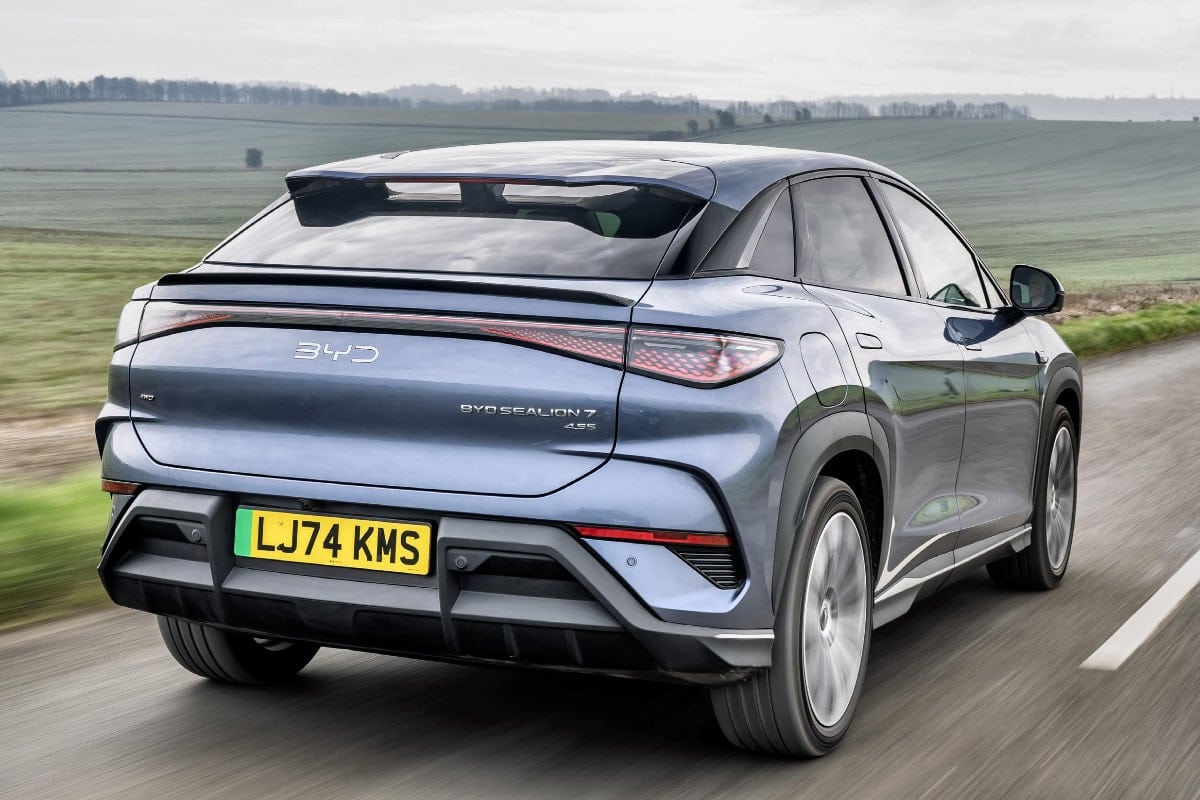
Sealion 7 is only 30mm longer than the Seal, but a taller (by 160mm) stance gives the impression of a much larger vehicle. It is pitched at the biggest sector in the UK – the mid-sized SUV market. Pricing starts at £46,990 for the rear-wheel drive, entry-level Comfort model, rising to £51,990 for Design and £58,990 for Excellence. Both the higher trim levels have all-wheel drive.
It’s a handsome car, with a strong family resemblance to the Seal saloon and Seal U compact SUV. All BYDs are styled by Wolfgang Egger, the former Audi and Alfa Romeo designer who BYD hired in 2017 to develop cars suitable for overseas markets.
Sealion 7 comes with a choice of two battery capacities, both based around BYD’s latest ‘blade’ battery technology. The battery is mounted under the floor, and is so strong that it actually forms part of the car’s structure. BYD calls this Cell-to Body (CTB) and it has a number of advantages; less weight and a thinner underfloor area, which in turn gives move headroom.
The RWD Comfort spec and AWD Design models have a 82.5kWh battery. This gives the single-motor version a WLTP combined range of 300 miles, while the twin-motor Design AWD has a WLTP figure of 283 miles. The range-topping Excellence AWD gets a larger 91.3kWh battery pack, which gives this version the longest range of any Sealion 7, at 312 miles.
All Sealion 7s get 11 kW three-phase AC charging as standard. Models with the 82.5kWh battery and there’s a choice of DC rapid-charging rates. Comfort and Design editions can be recharged at up to 150kW, allowing the battery to be recharged from 10% to 80% in 32 minutes. The larger-battery Excellence AWD can reach speeds of 230kW when hooked up to a DC ultra-fast charging station, meaning the battery can be recharged from 10-80% in just 24 minutes.
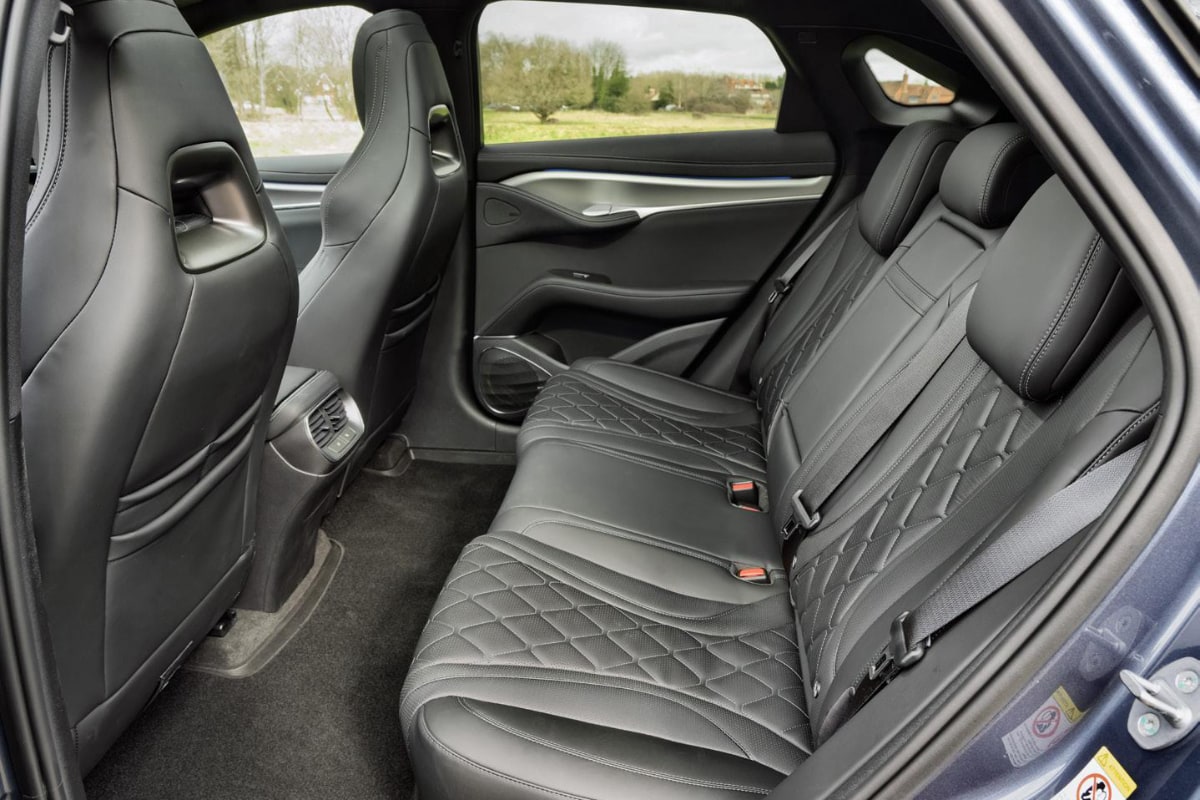
Sealion 7’s wheelbase is 10mm longer than the BYD Seal, and combined with a completely flat rear floor, this makes plenty of space in the rear cabin for three adults.
Greater attention has been placed on interior quality, with extremely good fit and finish and very comfortable seats. Rear seats have plenty of padding and rear headroom is generous, despite the coupe-style roofline. The Sealion 7 has double-layered laminated glass in the front doors and privacy glass in the rears. There’s plenty of natural light from above, thanks to a large, full-length electric panoramic sunroof.
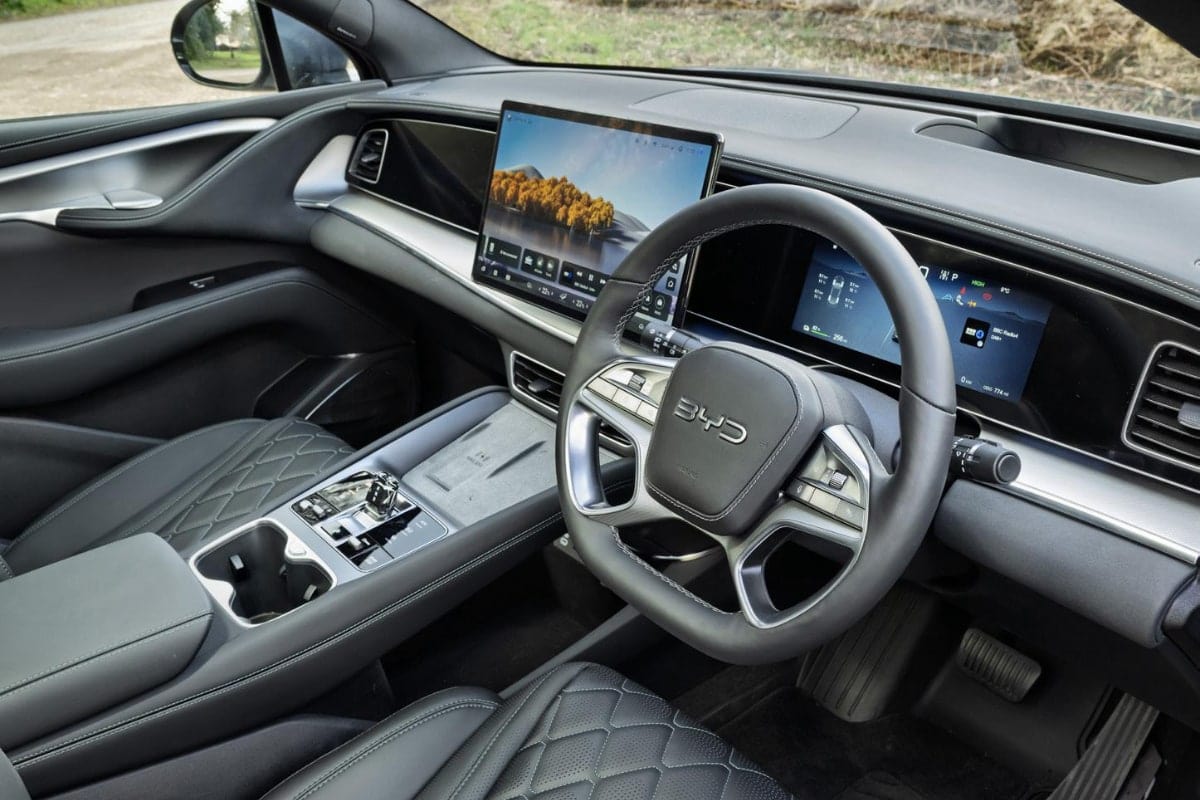
The driving position is good, with a four-way adjustable steering wheel and an electrically adjustable driver’s seat with ventilation and heating as standard.
As with the Seal, the Sealion 7 has BYD’s centrally mounted rotatable 15.6in touchscreen, as well as a 10.25in digital dash. The touchscreen takes some getting used to, with some fiddly menus though thankfully there is a bar below it for accessing often-used functions such as climate control or radio. Please allow a one-touch “turn off the bings and bongs” option too!
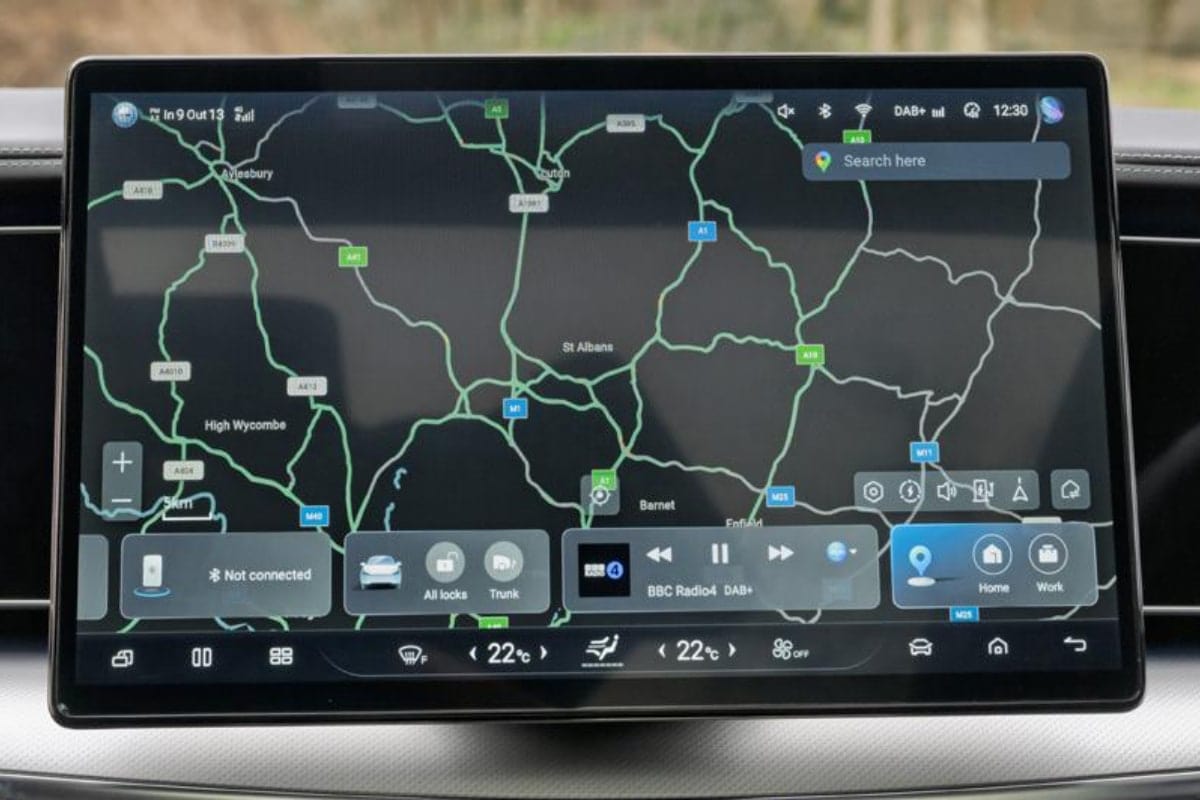
On the road the car has a “big car” feel. There’s plenty of power, with 0-62mph acceleration of 4.5sec on the twin-motor versions (6.7sec on the Design version). On the downside, it suffers, like a lot of tall, SUV-style EVs with drive-by-wire systems, from a rather unengaging driving experience. It’s at its best as a cruiser on motorways or dual carriageways.
Sealion 7 has wireless smartphone charging, a pair of USB ports for both front and rear passengers, and Vehicle-to-Load (V2L) technology that allows you to power domestic items (up to 3.3 kW) such as a small fridge or even a coffee machine.
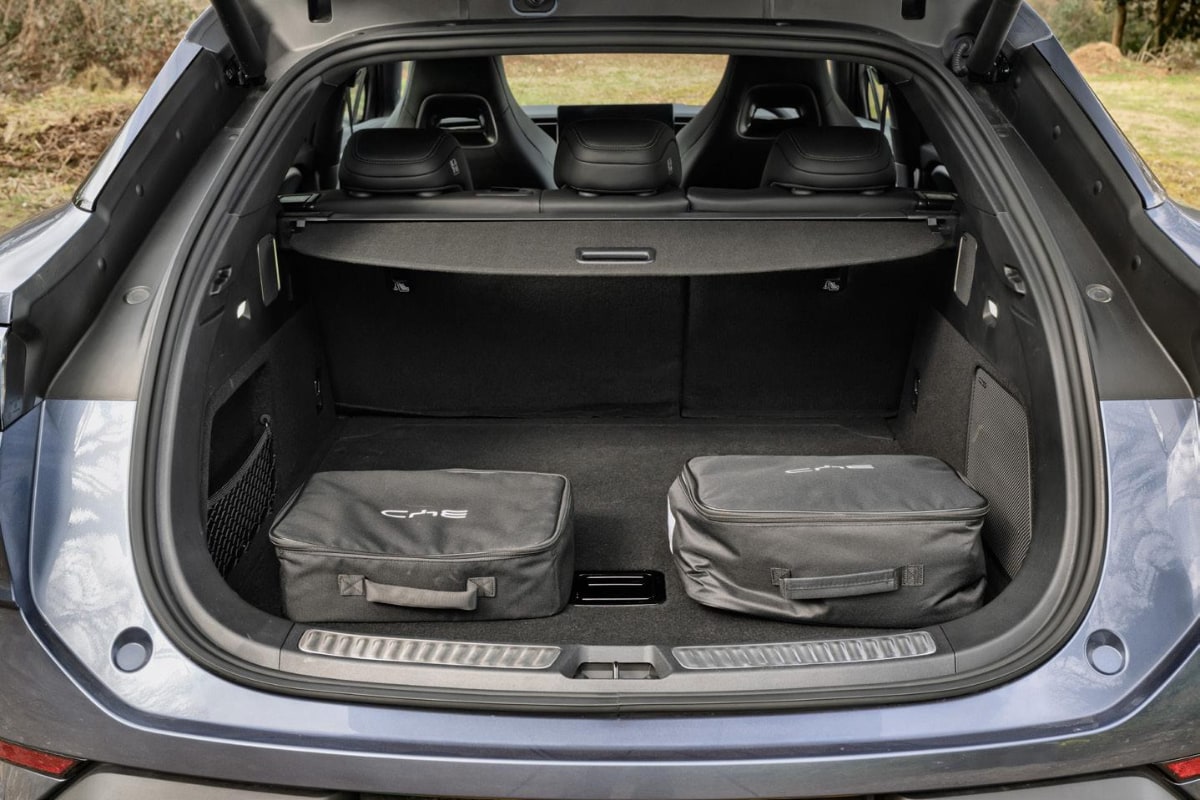
Boot capacity is a useful 520 litres with the rear seats in place. There’s also a 58-litre ‘frunk’ that’s ideal for storing charging cables or car-cleaning kit, while the cabin itself has more than 20 cubbyholes for keeping smaller items secure yet accessible, including an area for smartphones, at the base of the dashboard, that includes a wireless charging pad.
Verdict
BYD means business. This powerhouse Chinese automaker has only been in the UK for two years, yet it has already made a big impression.
The BYD Seal was very deservedly Professional Driver’s 2025 Car of the Year, and its big sister is arguably an even better vehicle, with loads of interior space and impressive build quality.
Electric range is good if not earth-shattering at just over 300 miles, though given BYD’s advances in battery tech and charging infrastructure, range anxiety is unlikely to be an issue in the future.
On the downside, the touchscreen system is rather fiddly and we’d like to spend longer with the car to get used to it. Like all modern electric SUVs, there’s plenty of acceleration and not enough handling feel, though the Sealion 7 is a very comfortable motorway cruiser.
Better than a Tesla Y? Yes, in just about every department. And it comes with a lot less baggage!
Data
Price as tested £58,990 OTR
| Specification | Details |
|---|---|
| Powertrain | Dual-motor EV |
| Transmission | Single-speed auto, all-wheel drive |
| Battery Pack | 91.3kWh Blade (LFP) |
| Power | 530hp (308hp rear, 215hp front) |
| Torque | 690Nm |
| Top Speed | 133mph |
| 0-62mph | 4.5sec |
| Electric Range | 312 miles (WLTP combined) |
| Charging Time | 9hr 36min AC (11kW 3-phase, 0-100%) 24min DC (230kWh rapid, 10-80%) |
| CO2 Emissions | 0g/km (WLTP) |
| Charge Port | CCS2 |
| Length | 4,830mm |
| Width | 1,925mm |
| Height | 1,620mm |
| Wheelbase | 2,930mm |
| Loadspace | 520 litres (rear), 58 litres (front) |
| Turning Circle | 5.85m |
| Vehicle Warranty | 6 years / 93,750 miles |
| Battery Warranty | 8 years / 125,000 miles |
| Drive Warranty | 8 years / 93,750 miles |
| Body Warranty | 12 years |
| Insurance Group | Gp 49E |
| VED Band | A |