London Assembly takes hard line on robotaxis in scathing new report
| 12 October 2026, 22:01
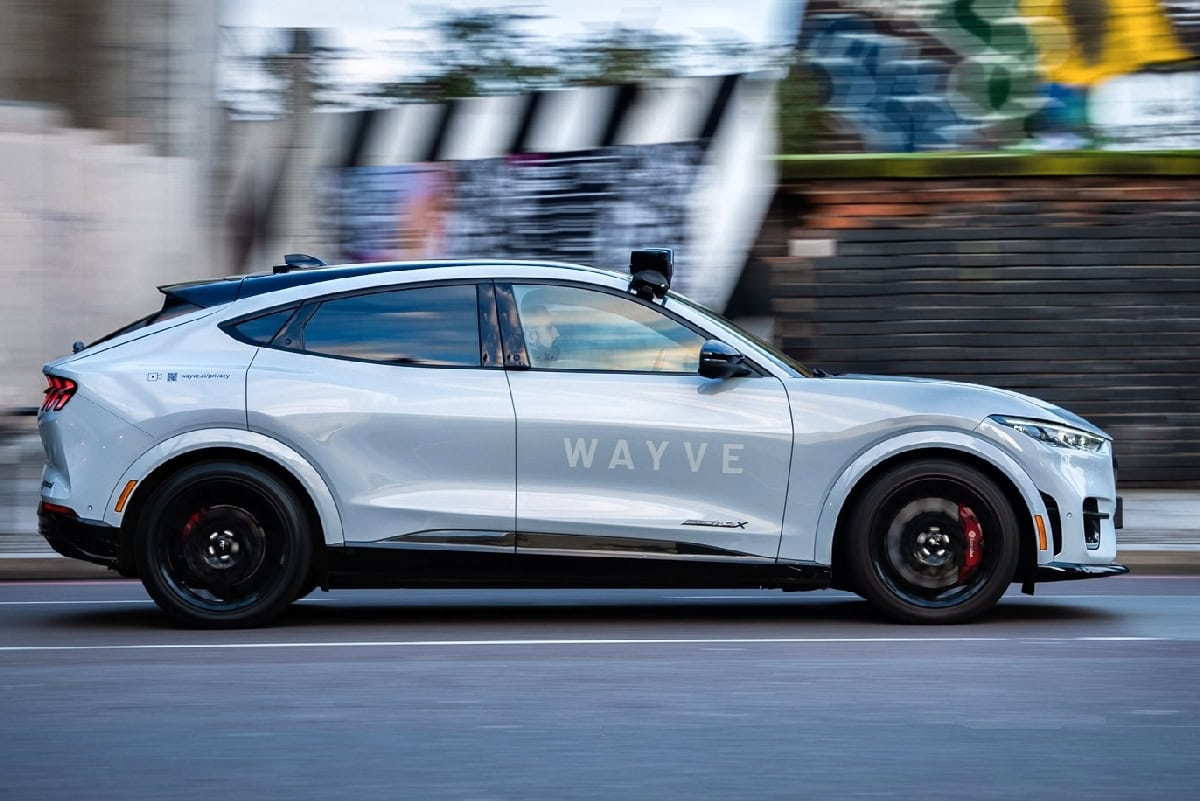
The London Assembly has demanded a halt to the deployment of autonomous taxis in London. In a damning report, it has made 13 recommendations to bring strict regulation to the so-called “robotaxi” market.
The report, “Who’s driving the future of autonomous transport in London?” raises concerns over safety, safeguarding and driver employment. It has gained widespread support from drivers’ trade unions, which want to see AV taxis banned altogether.
The report bluntly states: “As it stands, we currently have not heard sufficient evidence to persuade us that London should welcome autonomous passenger services.”
It calls for the powers to license robotaxis to be transferred to Transport for London, and TfL should be given strong powers to cap robotaxi numbers and withdraw operating permits if operators fail to meet safety and transport policy requirements.
Under the current rules, the government controls the issue of Automated Passenger Service permits through the DVSA. TfL must consent to permits covering London but does not hold the same licensing powers it has over conventional taxis and PHVs. The report calls for thee powers to be transferred to TfL when the Automated Vehicles Act is introduced in 2027.
These devolved powers should also enable TfL to set a cap on the number of autonomous passenger vehicles operators can deploy in London, including across different areas in London, when the full regulations under the Automated Vehicles Act are put in place in 2027.
Among the 13 recommendations, the report says a formal process should be established which would allow TfL to suspend an Automated Passenger Service (APS) permit. This should be introduced during the current pilot of the APS permitting framework.
Safety is a prime concern. “TfL should adopt a stronger safety baseline than that of the ‘careful and competent driver’ as a condition for granting consent to an operator being given an APS permit, the report states. “TfL should require operators to provide concrete evidence of how their vehicles and deployment plans could contribute to reducing road danger in London as set out in the Mayor’s Vision Zero strategy, taking into account London’s unique road network and multiple types of road user. TfL should not grant consent if applications do not meet this definition and should publish its criteria for granting consent.”
The report states that because robotaxis operate relatively successfully in the US, it does not mean they will work here. “We have found there to be considerable uncertainty around many of the claimed benefits of autonomous passenger vehicles. Operators have made bold safety claims, yet evidence we heard from Jeff Tumlin, who was Director of Transportation of the San Francisco Metropolitan Transportation Agency when autonomous passenger vehicles were introduced in San Francisco, questioned these claims.”
The report adds: “Operators’ safety claims are based on studies and assessments in US cities, and we remain unconvinced that this will necessarily translate on to London’s complex road network.”
The report addresses the issue of potential congestion caused by empty robotaxis cruising the streets waiting for a booking. The report says TfL should establish an ‘empty miles driven’ reporting metric, as a condition for granting consent to APS permits. “Negative impacts on congestion should be a reason for withdrawal of consent,” the report states.
Safety reporting forms another element of the proposals. Operators should have to report crashes and near misses within 24 hours, including information about the automated driving system’s decisions leading up to an incident. Other recommendations cover the lack of wheelchair-accessible robotaxis, and the establishment of protocols for interaction with emergency vehicles.
And the issue of driver employment is a key recommendation. “TfL should work with taxi and private hire drivers, their representatives and autonomous passenger service operators to develop a fair transition plan for the sector, should APS permits be issued. This should include management of any job losses, design of re-training and re-deployment opportunities, and a mechanism for funding transition arrangements.”
Unions have reacted strongly to the report. The Independent Workers’ Union of Great Britain (IWGB) wants to see robotaxis banned altogether. Gholomreza ‘Rez’ Kamyabi, an Uber driver and vice-chair of the IWGB private hire drivers branch, said: “We call on Sadiq Khan and TfL to stop driverless cars being unleashed on the streets of London. Many of our greatest anxieties were confirmed by this report from the London Assembly Transport Committee. Prior to its release, Autonomous Vehicles already represented a frightening prospect to every private hire driver. The report vindicates those fears.”
Kamyabi said drivers feared the technology could threaten their ability to earn a living. “Every car feeds a family, and the prospect of not being able to earn money leaves us all with a deep uncertainty as to how we will provide for them. We already struggle to get by as it is.”
IWGB President Alex Marshall described the possible job losses as a potential social and economic crisis and argued that technology companies and investors stood to benefit while workers bore the cost. “Their profit comes at our expense,” he said.
App Drivers and Couriers Union (ADCU) general secretary Cristina-Georgiana Ioanitescu welcomed recommendations covering drivers’ jobs and livelihoods: “The Assembly has rightly identified this as a devolved government issue, something we know to be close to the new Prime Minister Andy Burnham’s heart, so we hope, and expect, that he will act to restore meaningful powers to license autonomous vehicles to TfL and away from the Department for Transport,” she said.